Events
The Carillon
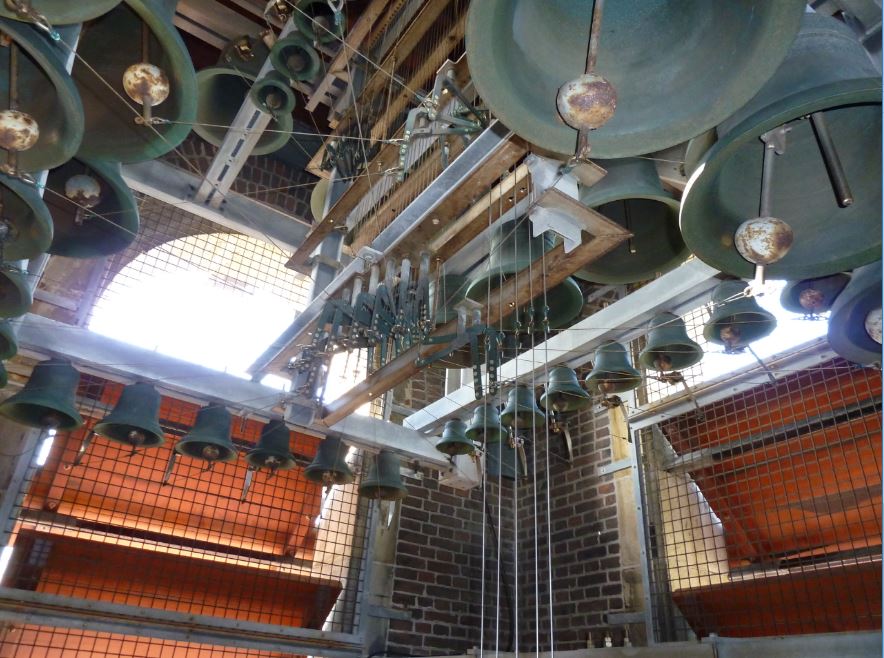
The carillon of the Peace Palace is an impressive musical instrument consisting of 48 bells and encompassing four octaves. The bells are made of bronze and vary in size and weight, with the largest bell weighing more than 1,200 kilograms. The bells are decorated with beautiful inscriptions and symbols that reflect the values of peace and justice. The carillon is owned by the Carnegie Foundation; Stichting Carillon Den Haag arranges its playing.
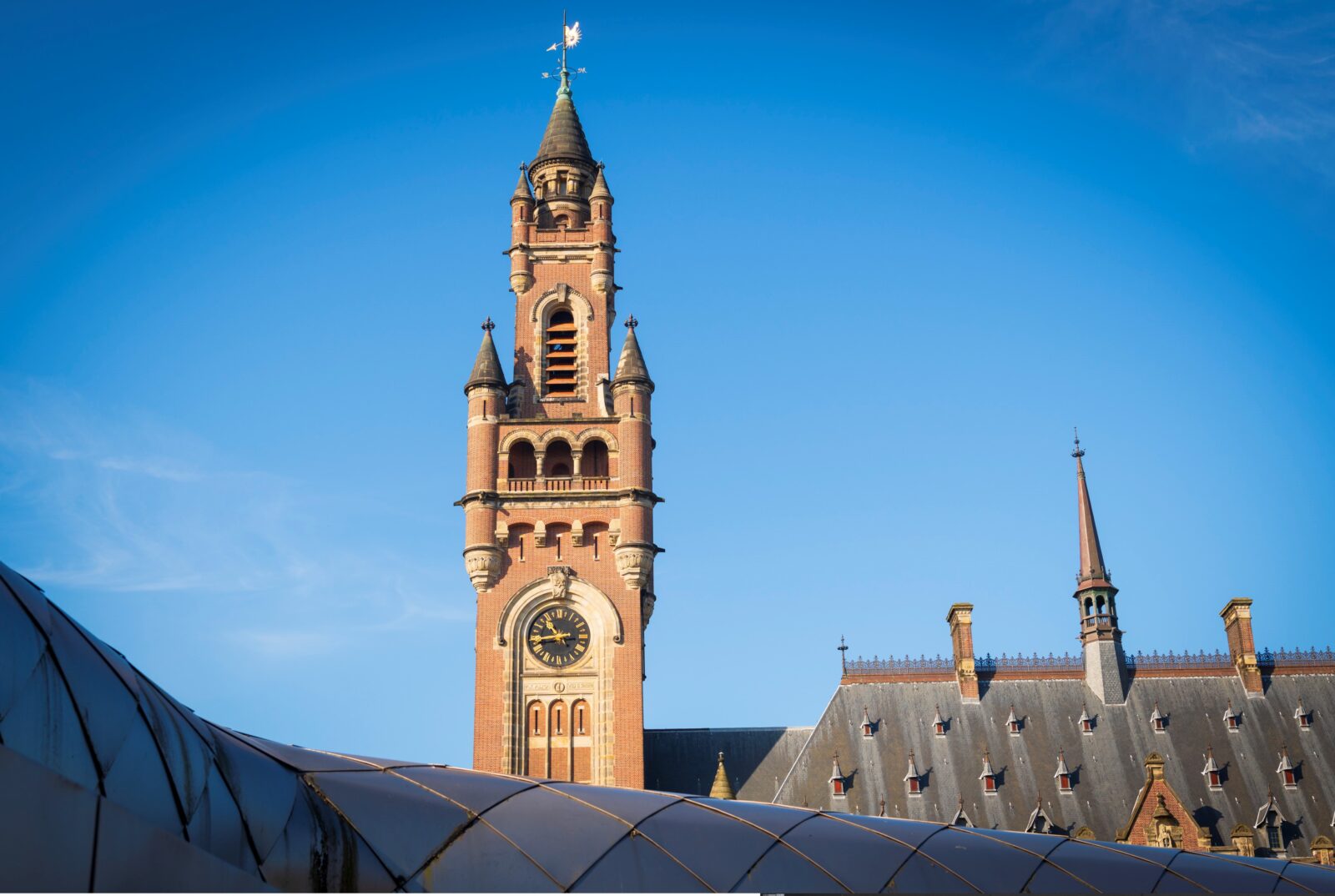
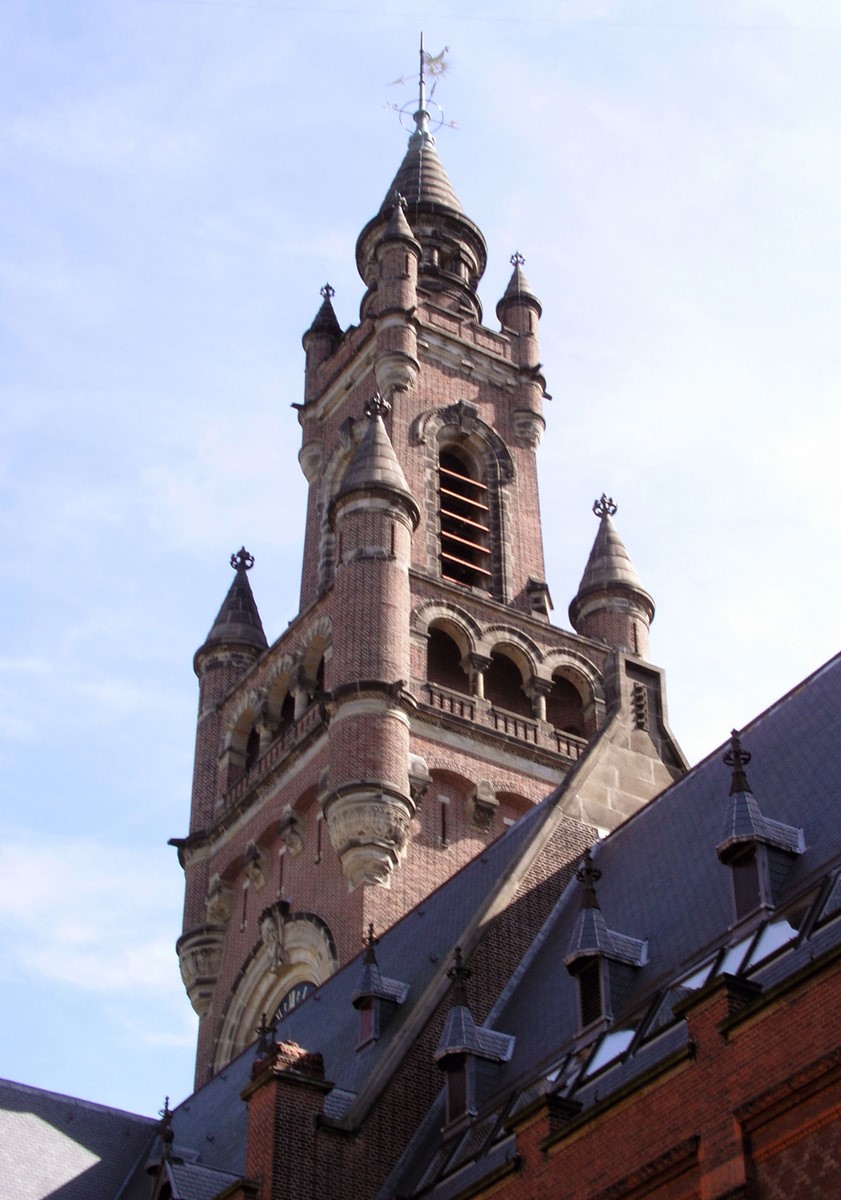
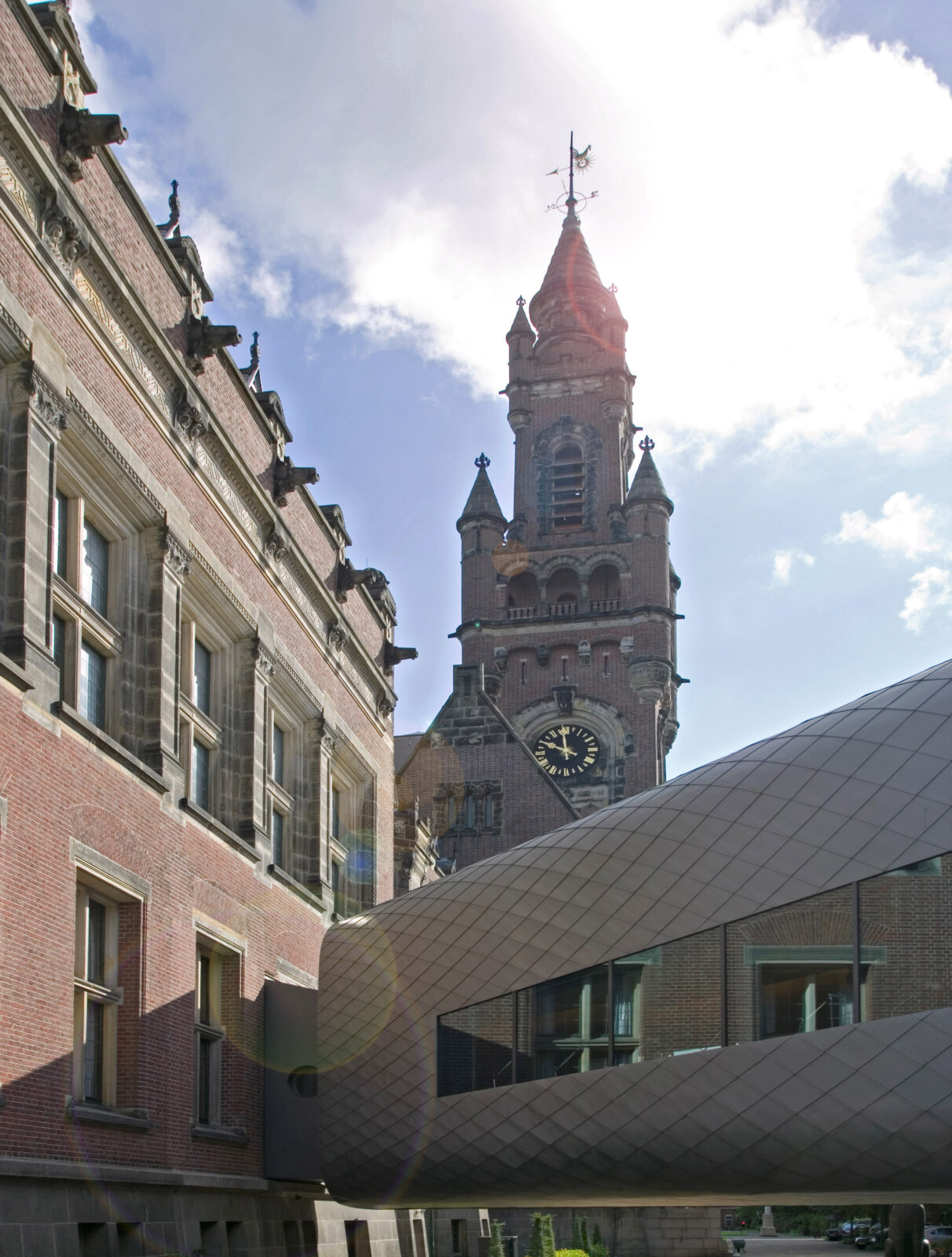
In addition to the carillon, the highest tower of the Peace Palace also houses a clockwork donated by Switzerland. The accompanying bronze clock indicates the whole and half hours. The clock bears the text “Möchte ich mit meinem Geläut den aufrichtigen Frieden verkünden.


The Creation of the Carillon
In 1986, on the occasion of a cultural exchange between the city of The Hague and the Canadian capital Ottawa, carillonneur Heleen van der Weel gave several carillon concerts in the Peace Tower of the Parliament building in Ottawa. After returning home, the initiative arose to install a carillon in The Hague’s `Peace Tower’ as well. This project became a success partly due to a committee of recommendation consisting of Dr. Javier Pérez de Cuéllar, then Secretary General of the United Nations, Hans van den Broek, then Dutch Minister of Foreign Affairs, Frits Korthals Altes, then Minister of Justice and Max van der Stoel, then President of the Carnegie Foundation.
The Hague Carillon Foundation, with Heleen van der Weel and Loek Boogert as leaders, was committed to realizing the project. Bells were donated by, among others, Dutch Queen Beatrix and Prince Claus, Dr. Nagendra Singh, President of the International Court of Justice, the governments of Belgium and Switzerland, the Municipality of The Hague and the Australian Carillon Society. Finally, the carillon of the Peace Palace was officially inaugurated on 3 November 1994. At the time, it was an instrument with 38 bells. With newly acquired funds, it reached a size of 47 bells in the year 2000. In honor of the 100th anniversary of the Peace Palace in 2013, the last large bell was cast. A bronze plaque at the entrance door of the Peace Palace shows an overview of all persons and organizations at home and abroad who contributed to this carillon consisting of 48 bells.
Earlier Attempt
As early as 1926, U.S. government official William Gorham Rice came up with the idea of installing a carillon in the tower of the Peace Palace. Rice was an authority on carillons in the United States and Europe. He even wrote a letter to Queen Wilhelmina to ensure that his plan received proper attention. As a result, the architectural advisor to the Peace Palace, Johan van der Steur, was commissioned to send construction drawings of the tower to Rice in the United States. Some time after that, the American himself came to The Hague and made an appointment with the board of the Carnegie Foundation, trustee of the Peace Palace, to convince them of the plan to donate a carillon with 35 bells. For unknown reasons, William Gorham Rice’s plan was not carried out at the time.


Playing
The carillon of the Peace Palace has no function of indicating time by playing melodies preceding the full and half hour chimes: it is purely a concert instrument. From the beginning, the concerts are always held every Tuesday and Thursday from 1 pm – 1:45 pm. The program is carefully composed by carillonneur Heleen van der Weel and is published in a window near the porter’s lodge. Good listening places are the benches on Carnegieplein and the garden of Museum Mesdag on Laan van Meerdervoort.
International Network and Hymn of Nations
Since 30 November 2017, the carillon Peace Palace has been part of the international network of War Memorial and Peace Carillons (www.peacecarillons.org). These approximately 40 “monuments in sound” remind us of the victims who sacrificed their lives for our freedom during wars worldwide. In honor of the 25th anniversary of the carillon and in honor of 75 years of liberation in the Netherlands, carillonneur Heleen van der Weel arranged the “Hymne des Nations” especially for the carillon. This hymn was written by Dutch pianist and composer with Jewish roots Karel (Charles) Grelinger (1873-1942). He studied at the conservatories in Amsterdam and Paris, wrote operas and worked on many musical compositions. In 1942 he was imprisoned and transported to camp Auschwitz. During this trip, he died. Compositions by him could be found in the Bibliothèque nationale de France in Paris and in the Netherlands Music Institute in The Hague.
Source: Heleen van der Weel, Stichting Carillon Den Haag
Carnegie Wateler Peace Prize Awarded to the Netherlands Armed Forces
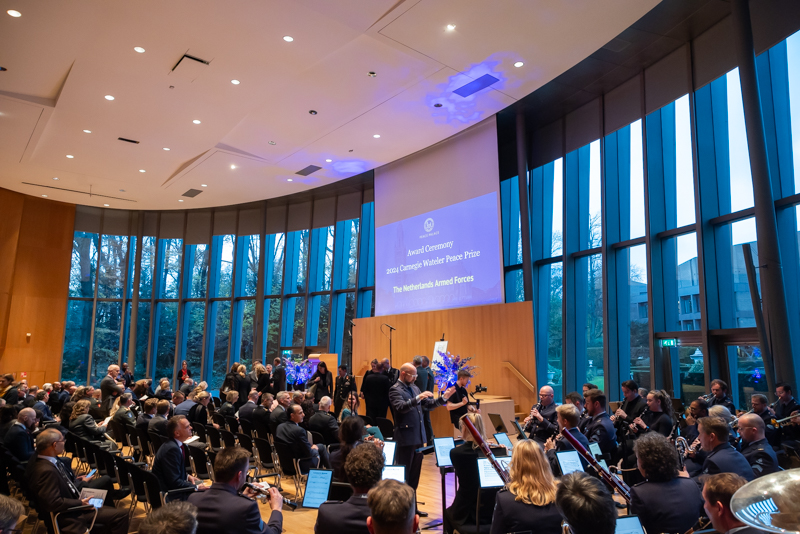
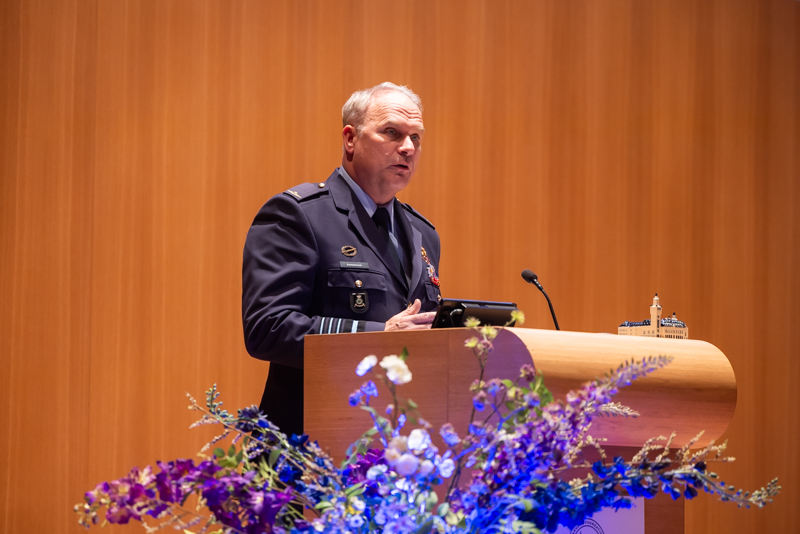
On 26 November 2024, the Netherlands Armed Forces received the Carnegie Wateler Peace Prize, the second oldest peace prize in the world. This honor was awarded to the Netherlands Royal Navy, Royal Army, Royal Air Force, and the Marechaussee for their involvement in more than 80 peace missions worldwide.
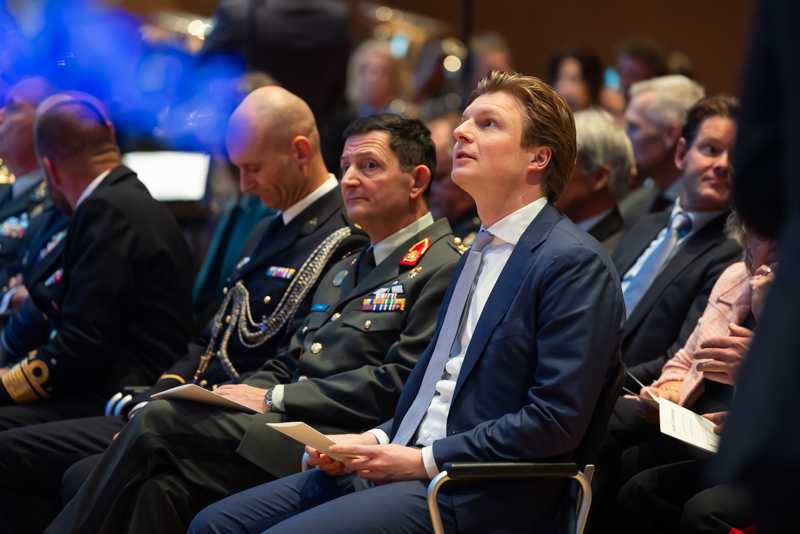
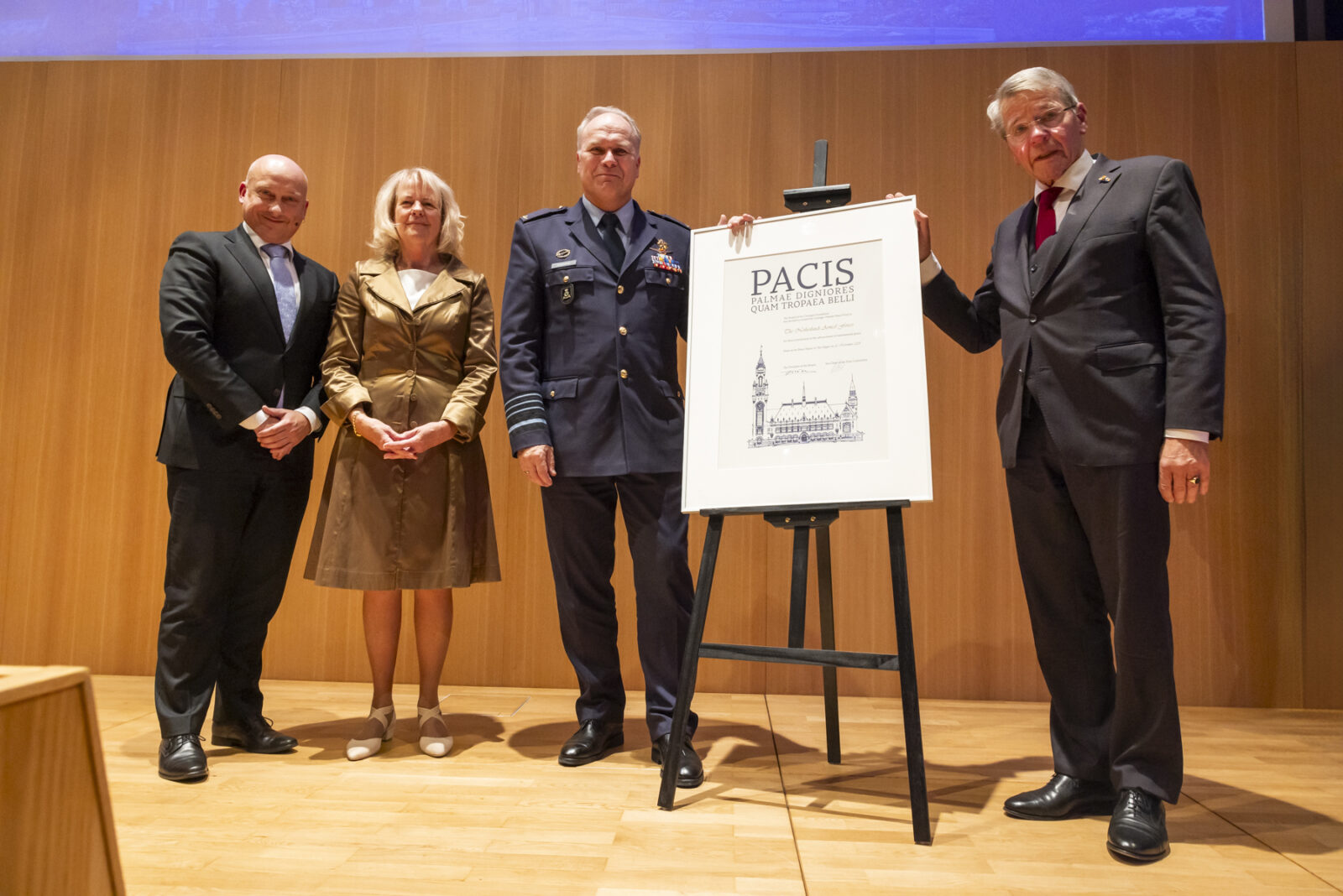
More than 200 guests, including 35 ambassadors, Dutch Ministers Ruben Brekelmans and David van Weel, and many military personnel, gathered in the Auditorium of the Peace Palace for the festive Award Ceremony. Piet Hein Donner, Minister of State and President of the Carnegie Foundation, and Dr. Elisabeth Wesseling-van Gent, Chair of the Jury, presented the Award to General Onno Eichelsheim, Chief of Defense.
Laureate
“I know that for some, it may be strange to see someone in a military uniform talking about peace,” said General Eichelsheim, who accepted the Peace Prize on behalf of the entire Netherlands Armed Forces. In his speech, the general elaborated on various peace missions, as well as current and future deployment possibilities. Eichelsheim emphasized that the Netherlands are the only country in the world that have enshrined the development of the international legal order in its constitution, warning that the rule of law is under pressure. “Seeing the darkness of war helped me to appreciate the light even more. Peace. Freedom. Democracy. Rule of law. Humanity towards each other. We will never lose sight of what we aim to protect: a free democracy, international rule of law, the sovereignty of states. We will continue to participate in missions that seek to safeguard and promote these values“, said the Chief of Defense.


Jury Report
The Peace Prize jury explained their choice of laureate as follows:
“The Netherlands Armed Forces, through their four branches, the Royal Netherlands Army, Air Force, Navy and Marechaussee have always played and continue to play a significant role in peacekeeping, peacebuilding and stability. As early as 1913, long before the United Nations and UN peace missions existed, the Netherlands Armed Forces carried out their first peace mission in Albania, the same year the Peace Palace opened its doors. This shows that more than a hundred years ago, it was already recognized that peacekeeping and peacebuilding have many dimensions.
Since World War II, the Netherlands Armed Forces have participated in more than 80 peace missions under the flags of the United Nations, NATO, and the European Union. In addition to military support, the armed forces also provide civilian assistance. Dutch soldiers are often involved in building infrastructure, providing medical care, supporting local communities, training troops, and maintaining the rule of law.
By presenting the 2024 Carnegie Wateler Peace Prize to the Netherlands Armed Forces, we would like to honor and thank all Dutch military personnel who, on a daily basis, push their own boundaries to protect those of others. Members of the Netherlands Armed Forces dedicate and sometimes sacrifice their lives to preserving or building peace worldwide.”
Mental Consequences and ARQ Center
Dr. Tine Molendijk, an interdisciplinary cultural anthropologist specializing in military culture and ethics, and Prof. Lonneke Peperkamp, professor of military ethics and leadership, highlighted participation in peace missions from a different perspective. Molendijk described how military operations can affect soldiers’ mental health. During the Award Ceremony, the Chief of Defense announced that the prize money of 35,000 euros would go to the Dutch ARQ Nationaal Psychotrauma Centrum, the national expertise center for the diagnosis and treatment of people with complex psychotrauma complaints.


Carnegie Wateler Peace Prize
The Carnegie Wateler Peace Prize has been awarded in the Peace Palace since 1931. The board of the Carnegie Foundation honors with this prize a person or institution that promotes international peace, through word or deed. The prize was established by the Dutch banker Johan Wateler and entrusted to the Carnegie Foundation. Today, the Carnegie Wateler Peace Prize was awarded for the 74th time.
New Exhibition Visitors Centre: Climate Change
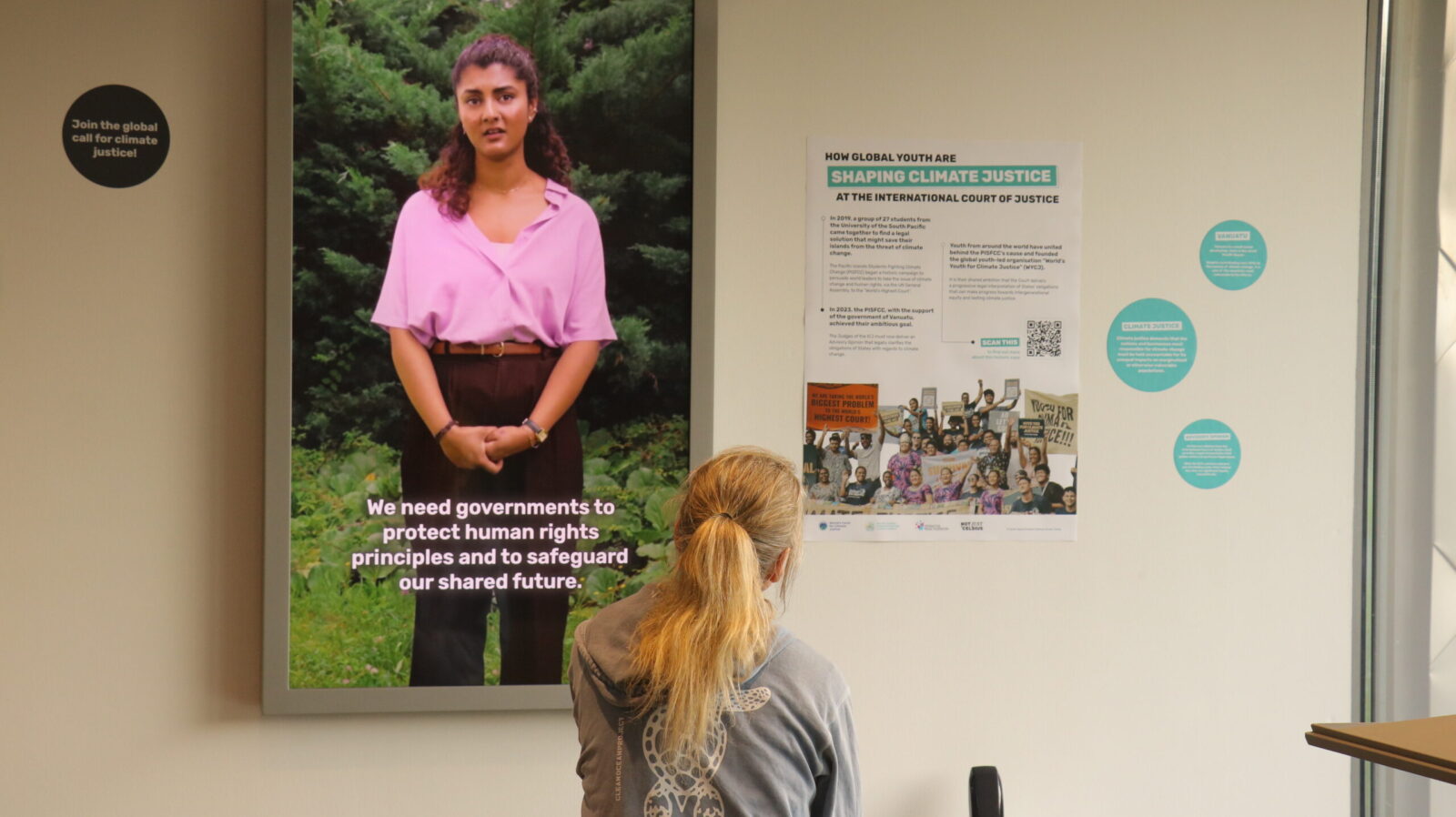
Since September 2024, a new exhibition was on display in the Peace Palace Visitor Center that demonstrates the consequences of climate change and its direct link to the causes of conflict. The exhibition also showcases the efforts of the Pacific Islands Students Fighting Climate Change (PISFCC) and the World’s Youth for Climate Justice (WYCJ) advocating for climate justice through international law.
Correlation between Climate Change and Peace
There is a clear correlation between climate change and peace, or, in other words, there is a link between global warming and the causes of conflict. The consequences of climate change include an increase of extreme weather events such as hurricanes, tornadoes, heat waves, more frequent flooding, wildfires and droughts. These inevitably lead to the destruction of land and livelihoods, food insecurity and displacement – all of which are factors that promote conflict.


Exhibition Peace Palace Visitors Centre
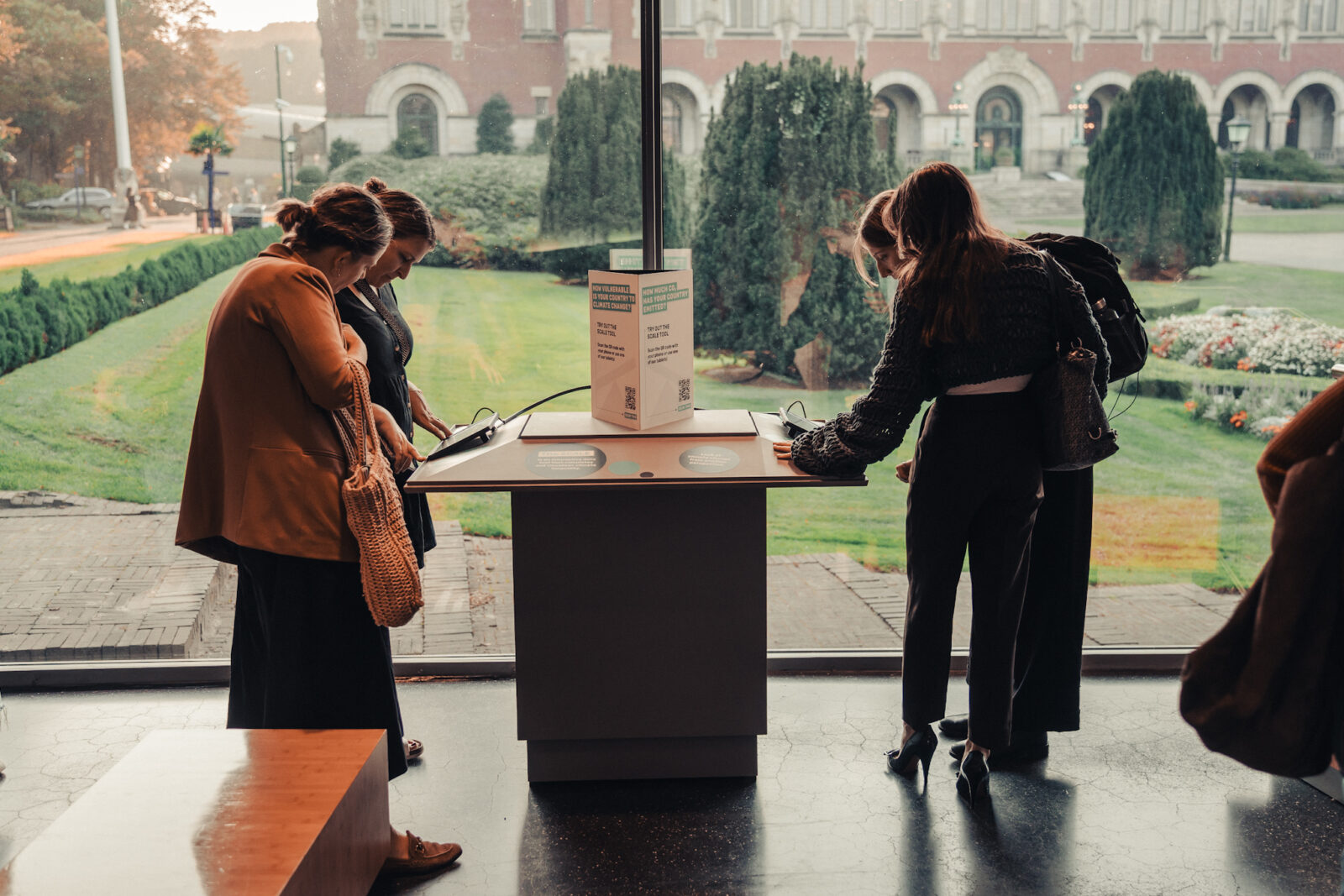
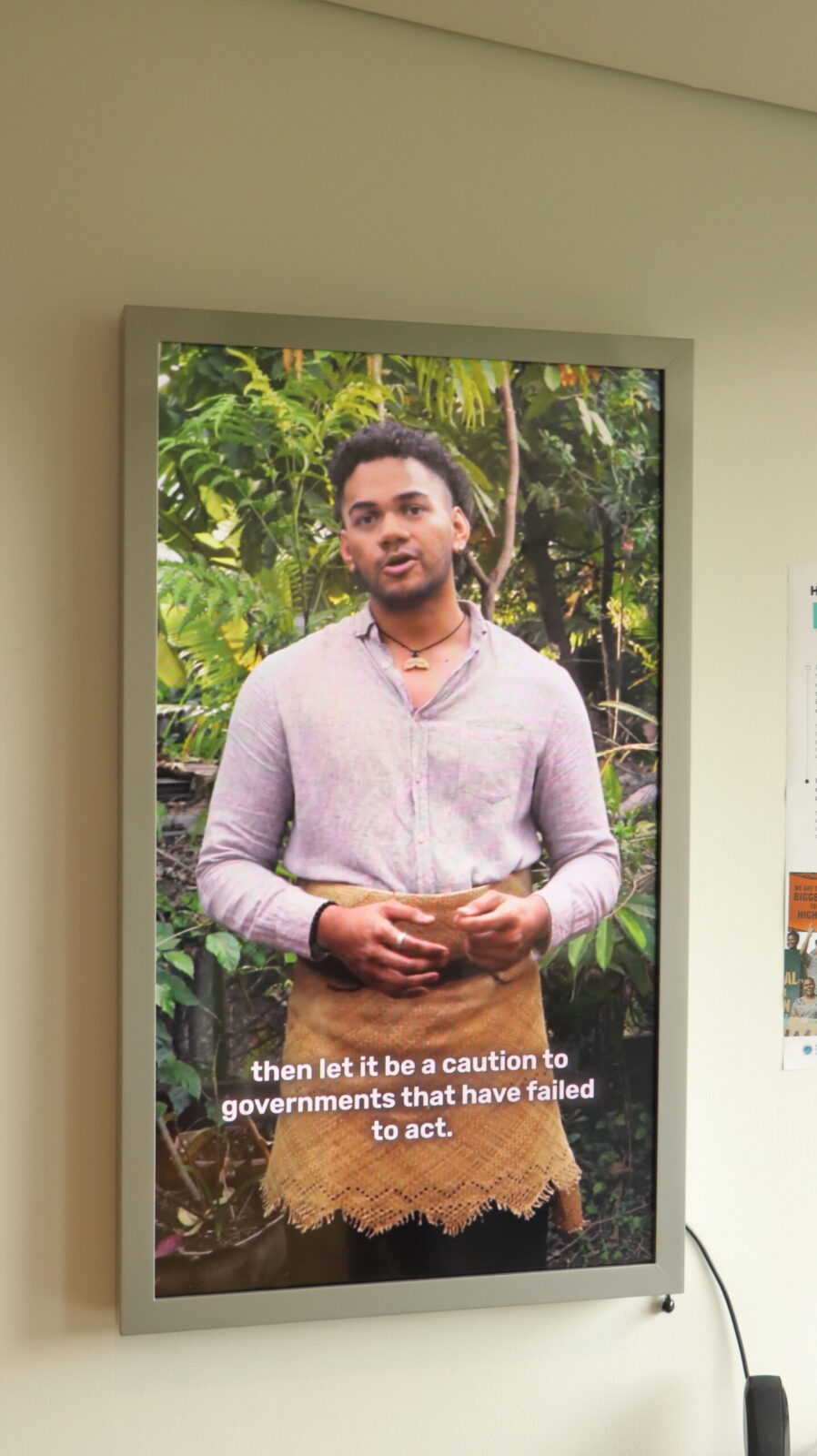
The exhibition in the Visitors Centre was opened last weekend as part of the International Day of Peace and consists of two main components: a video exhibition and an interactive scale.
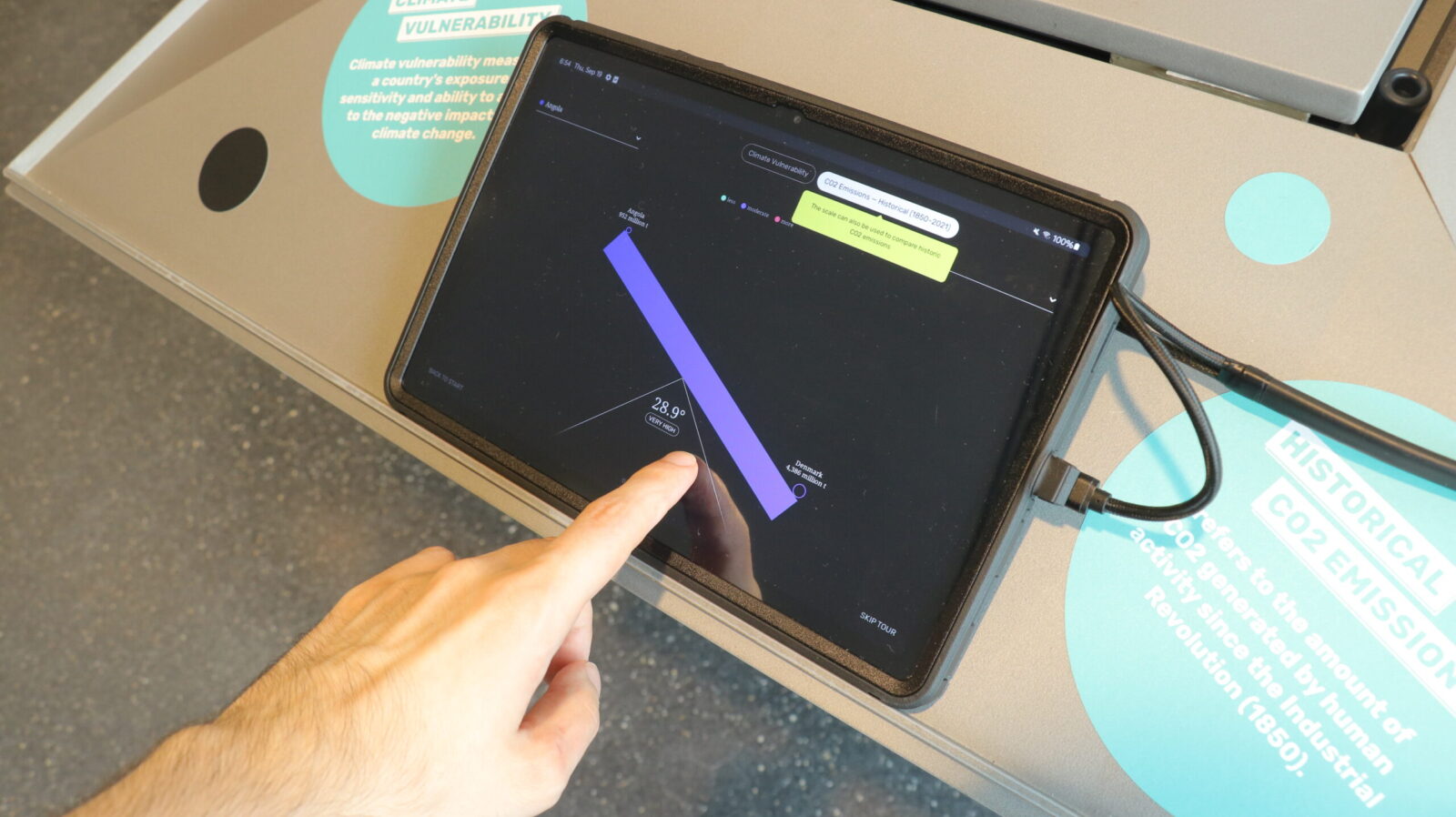
The video features four interviews with individuals from climate-vulnerable regions, including Mayotte, Tonga, India, and Pakistan which amplify the voices of those highly affected by extreme weather events and rising sea levels. Accompanying information material provides an overview of the campaigns led by youth organizations PISFCC and WYCJ. The Scale is an engaging data tool allowing visitors to visualize climate inequality, illustrating nations’ contributions to CO2 emissions and their vulnerability to climate change. This digital tool (externe link) underscores the unequal distribution of climate impacts and highlights the urgent need for global action.
The Visitors Center of the Peace Palace houses the exhibition about climate change until 12 February 2025; it can be visited from Wednesday to Sunday, from 12 noon to 5 pm. Admission is free.
The exhibition was jointly planned and realized by the Pacific Islands Students Fighting Climate Change (PISFCC), World’s Youth for Climate Justice (WYCJ) and Interactive Media Foundation (IMF), a non-profit organization specialized in producing educational and cultural projects.
World’s Youth for Climate Justice
On 7 December 2023, World’s Youth for Climate Justice (WYCJ) was awarded the Youth Carnegie Peace Prize at the Peace Palace for its efforts in advocating for climate justice. It is the global sister organization of the Pacific Islands Students Fighting Climate Change (PISFCC), which was founded in 2019 by 27 law students to raise awareness of rising sea levels and the threat to Pacific islands like Vanuatu. The youth movement is known worldwide for campaigning for an advisory opinion from the International Court of Justice (ICJ) on states’ obligations in relation to climate change.
The jury, which presented the Peace Prize to the youth organization in 2023, declared: “WYCJ is a great example of how young people can cooperate internationally to make a difference. That the work of these young peacebuilders consists of well thought out actions and strategies based on international law is shown in their publications. Their Youth Climate Justice Handbook presents legal arguments to help parties make submissions to the ICJ and ensures that young people’s voices are taken into account during the hearings.”


Advisory Opinion of the International Court of Justice
On 29 March 2023, the General Assembly of the United Nations adopted resolution A/RES/77/276, in which, referring to Article 96 of the Charter of the United Nations and Article 65 of the Statute of the Court, it requested the Court to give an advisory opinion on states’ obligations regarding climate change as well as the legal consequences under these obligations. The public hearings on the request for an advisory opinion are scheduled to open on Monday 2 December 2024.